CLEAN INSIGHTS / Protection & climate
ESD protection during IT cleaning
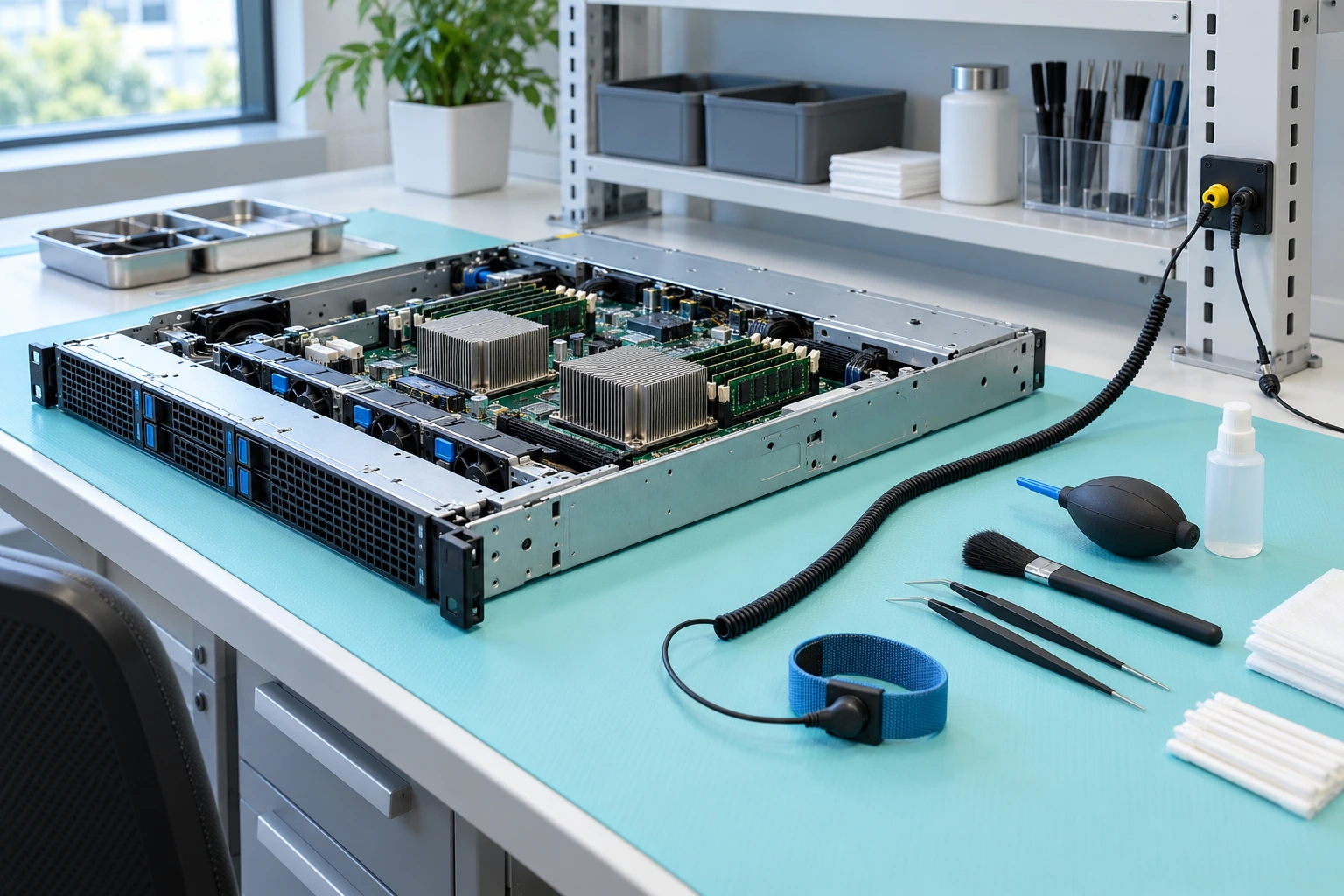
Sensitive electronics need ESD precautions when open equipment is cleaned. This involves a suitable workstation, appropriate tools and trained personnel.
Understand what ESD means
ESD means electrostatic discharge. It can damage sensitive electronics without an immediately obvious fault. When devices are opened and assemblies exposed, the workstation needs to suit the work planned.
Treat the workstation as a system
For internal equipment cleaning, consider the work surface, personnel, tools and materials together. An ESD workstation is more than a mat. Its protective measures need to work together and be checked under the operational ESD control programme.
Translate training into the workflow
Establish which devices will be handled and which site requirements apply. Coordinate laydown areas, packaging, transport and sequence accordingly. COM.SAR IT Cleaning uses ESD-trained personnel and considers these requirements when opening and cleaning approved equipment.
Match cleaning equipment and consumables
ESD suitability also matters for attachments, wipes and supporting materials. An antistatic label alone is not complete evidence of suitability for a particular task. Selection and use depend on the device, manufacturer instructions and agreed method of work.
Distinguish ESD control from electrical safety
ESD measures protect sensitive electronics. They do not replace protection against electrical hazards. The responsible personnel therefore establish equipment state, work approvals and necessary protective equipment separately and coordinate these for the assignment.
Agree checks and documentation
Define which preparation and evidence will be recorded for the assignment. This enables equipment condition, completed cleaning and observations to be traced. The actual method matters; a general reference to a standard does not describe the workstation or the work performed.
FOR YOUR PLANNING
Your checklist at a glance
- Identify devices and sensitive assemblies
- Agree the site ESD approach
- Consider surfaces, personnel and tools together
- Assess electrical hazards separately
- Record preparation and completed work